


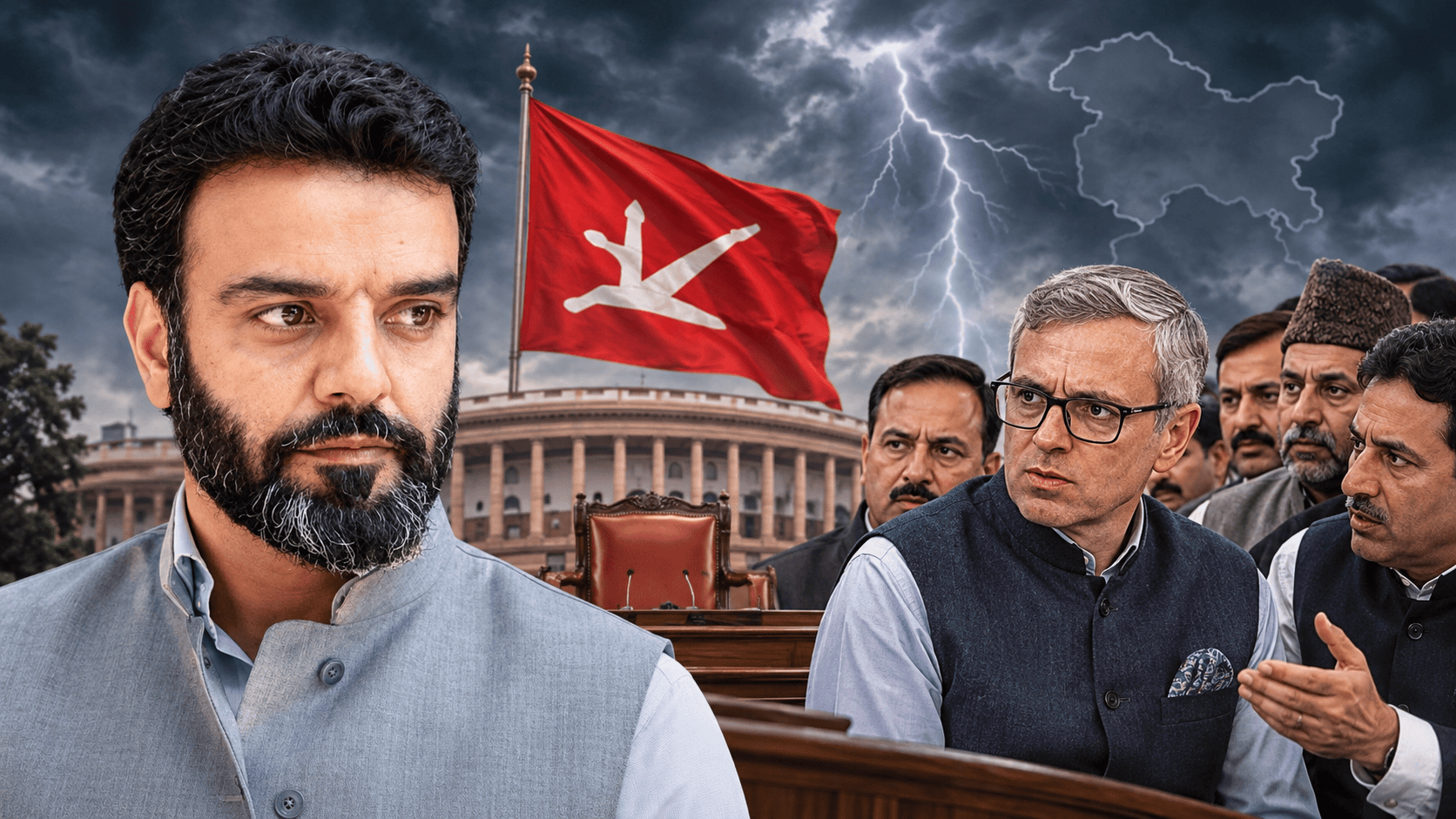



As Aga Ruhullah prepares to quit the National Conference and his Lok Sabha seat over unfulfilled promises, questions mount over whether Srinagar should lose its parliamentary voice because of a political battle with the party leadership. Meanwhile, discontent among NC legislators exposes a wider crisis of political accountability.
Arsalan Ashiq
The growing political crisis within the Jammu and Kashmir National Conference is no longer confined to disagreements over its manifesto, cabinet expansion or the leadership of Chief Minister Omar Abdullah. It is increasingly raising a fundamental question about political accountability: are elected representatives answerable primarily to their political parties, or to the people who elected them?
At the centre of this unfolding political drama is Srinagar MP Aga Syed Ruhullah Mehdi, who has announced his intention to resign from both the National Conference and his Lok Sabha membership on November 3, accusing the party leadership of abandoning its electoral commitments.
Ruhullah’s criticism of the National Conference is not without substance. The party sought public support in the 2024 Assembly elections on promises that included the restoration of Articles 370 and 35A, the repeal of the Public Safety Act, the release of political prisoners and the protection of Jammu and Kashmir’s constitutional rights.
His argument is straightforward: a political party cannot seek votes on a particular set of promises and subsequently invoke political realities to justify its inability or unwillingness to pursue them.
The National Conference leadership must answer these questions. Winning an election does not absolve a government of its responsibility to explain the gap between its electoral commitments and its performance.
However, Ruhullah’s proposed response raises an equally important question: Why should the people of Srinagar have to bear the consequences of a political disagreement between an elected MP and his party?
A mandate that belongs to the people, not the party
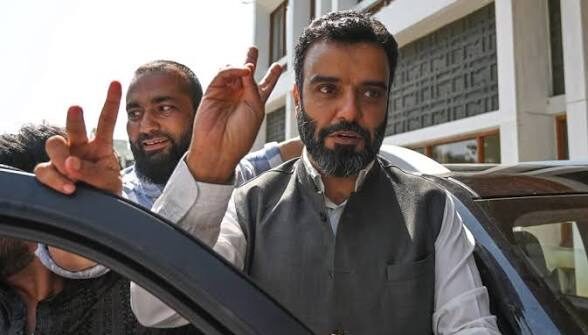
Ruhullah was elected to the Lok Sabha in June 2024. Under Article 83(2) of the Constitution, the normal term of the Lok Sabha is five years from its first meeting, unless dissolved earlier.
His proposed departure, roughly two years into that parliamentary term, therefore raises questions about the responsibility that comes with an electoral mandate.
His victory was not merely an endorsement of the National Conference as a political organisation; it was also a public expectation that he would represent Srinagar’s concerns in Parliament.
Over the past two years, Ruhullah has emerged as a prominent and outspoken political voice, particularly on issues concerning Jammu and Kashmir’s constitutional position, political rights and public grievances.
His parliamentary interventions have earned him support among sections of the population who see him as a representative willing to challenge the establishment without hesitation.
That makes his proposed resignation more consequential than an ordinary party exit.
The question is not whether Ruhullah should continue defending his ideological position. He absolutely should. He should question the NC leadership, challenge Omar Abdullah, demand accountability from Farooq Abdullah and refuse to compromise on issues he believes are fundamental to the people.
But why abandon the parliamentary platform altogether?
If he believes the National Conference has failed to honour its promises, he can continue exposing those failures from within Parliament. An MP who is no longer politically constrained by party leadership could arguably become an even more effective voice on issues affecting Jammu and Kashmir.
There is a difference between resigning from a political organisation and surrendering the constitutional responsibility entrusted to an elected representative.
If Ruhullah has spent two years questioning the party’s direction, why not spend the remaining parliamentary term questioning it while continuing to represent his constituents?
What does Srinagar lose if Ruhullah leaves Parliament?
Jammu and Kashmir has only five Lok Sabha constituencies. Srinagar and Baramulla are two constituencies based in the Valley, while Anantnag-Rajouri includes areas from both the Kashmir and Jammu regions.
In such a limited parliamentary representation, every elected voice carries considerable significance.
Ruhullah’s departure would mean the loss of an established and outspoken representative at a time when questions concerning constitutional rights, statehood, political representation and the region’s future continue to demand attention at the national level.
Parliament is not merely a platform for party politics. It is where elected representatives question the government, raise public grievances, participate in debates and demand answers from those in power.
His supporters admire him precisely because they believe he has used that platform fearlessly.
The uncomfortable question, therefore, is whether a political protest against the National Conference should deprive Srinagar’s electorate of that voice before the normal completion of his parliamentary term.
Ruhullah may argue that continuing in Parliament while remaining associated with a party that has abandoned its promises would make him complicit in its failures. But there is another way of looking at it: walking away from Parliament could also leave the very people whose rights he claims to defend with one less established parliamentary representative.
A political gamble with an uncertain destination
There is also a political calculation that Ruhullah cannot ignore.
If he walks away from the National Conference and Parliament, what is his next political destination?
His ideological differences with the National Conference leadership are evident. A move towards the BJP would appear difficult to reconcile with his stated political positions, while joining the PDP would require a significant political realignment.
He could choose to remain independent and build a separate political platform. But that would mean entering a political landscape where he would have to establish an organisation, build a support base and translate personal popularity into a sustainable electoral force.
His parliamentary performance and public following may give him considerable political capital, but personal popularity and electoral organisation are not necessarily the same thing.
His resignation could therefore become a high-risk political gamble. A leader who leaves an established party may discover that challenging the system from outside it is considerably more difficult than challenging it from within.
Whether this becomes political reinvention or political isolation will depend on what he does next.
NC’s disgruntled MLAs: The other side of the accountability question
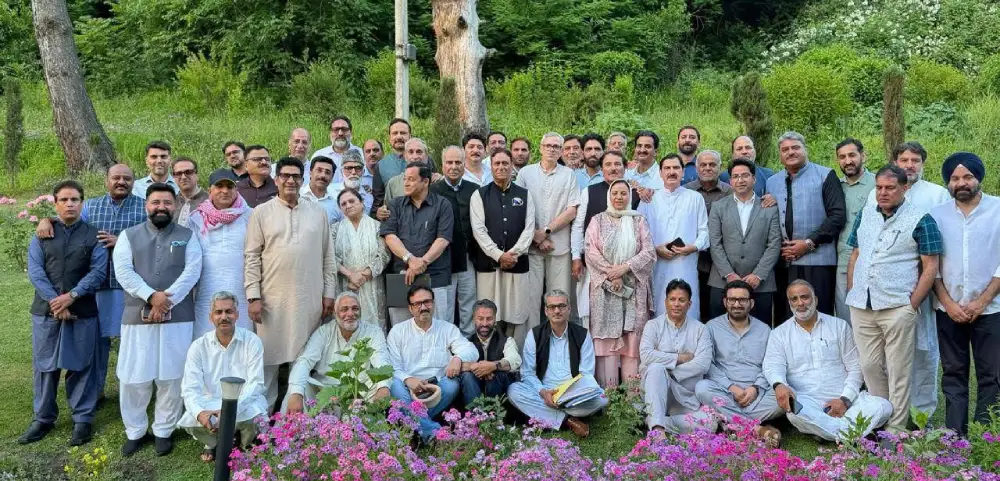
While Ruhullah’s proposed exit has dominated political discussions, another crisis is unfolding within the National Conference.
The recent cabinet expansion has exposed considerable dissatisfaction among sections of the party’s legislators.
The Indian Express reported that 18 aggrieved NC legislators met amid discontent over the cabinet reshuffle. Their reported meeting has brought questions about internal democracy, seniority, regional representation and the distribution of ministerial positions into the open.
However, a meeting of dissatisfied legislators should not automatically be interpreted as a collective decision to resign or leave the party.
There is one fundamental reality that these legislators must acknowledge.
Jammu and Kashmir has a 90-member elected Legislative Assembly. Section 53 of the Jammu and Kashmir Reorganisation Act, 2019, limits the Council of Ministers to 10 per cent of the total Assembly strength.
That means the government can have a maximum of nine ministers, including the Chief Minister.
It is simply not mathematically possible to accommodate every ambitious legislator in the cabinet.
The disappointment of those left out may be politically understandable. Questions about internal democracy and the fairness of the selection process deserve answers. But threatening to abandon the party simply because one has not received a ministerial position raises questions about the priorities of elected representatives.
Did they enter politics to serve their constituencies, or was a ministerial chair the ultimate objective?
The National Conference won 42 of the 90 Assembly seats in the 2024 elections. Its legislators contested under the party’s political banner, manifesto and organisational structure, which played a significant role in securing the party’s mandate.
It would therefore be difficult for any legislator to pretend that the party played no role in securing that mandate.
If an MLA decides to leave the National Conference, the question is not merely what happens to the party. The larger question is whether that representative can retain the same public support without the political organisation through which the electorate originally elected them.
The anti-defection provisions under the Tenth Schedule also make such a move legally consequential. A legislator who voluntarily gives up membership of the political party on whose ticket they were elected can face disqualification, subject to the constitutional provisions, applicable exceptions and due process.
An MLA cannot simply assume that leaving the party and continuing as an independent legislator is an uncomplicated option.
The National Conference must answer too
None of this absolves the National Conference leadership of responsibility.
The party cannot expect unconditional loyalty from its legislators while failing to address legitimate concerns about its manifesto, governance and internal functioning.
It cannot demand that its MPs defend its political decisions while offering no convincing explanation for the gap between its electoral commitments and its performance.
At the same time, the party’s manifesto must be examined against the constitutional and administrative realities of Jammu and Kashmir’s Union Territory status.
Promises such as restoration of statehood and Articles 370 and 35A cannot be treated as ordinary administrative decisions that the UT government can independently implement. They involve constitutional and political processes beyond the government’s direct control.
But that does not give the party an unlimited excuse. It must explain what steps it has taken, what obstacles it has encountered and what it intends to do next.
The cabinet expansion has also exposed the need for a more transparent and consultative approach to internal party decisions.
A party that secured a significant mandate in 2024 must understand that public expectations were equally significant. Its legislators should be encouraged to raise questions rather than being reduced to political spectators.
But the same standard of accountability must apply to those questioning the leadership.
An MP cannot treat Parliament as disposable because his relationship with his party has deteriorated. An MLA cannot treat an electoral mandate as personal property that can be detached from the political platform on which it was secured.
The bigger question: Who is accountable to the voter?
The National Conference has questions to answer about its manifesto. Omar Abdullah has questions to answer about governance. Farooq Abdullah has questions to answer about the party’s direction.
But Ruhullah and the disgruntled legislators have questions to answer too.
An election is not a five-year guarantee of political convenience. It is a responsibility to represent people, raise their concerns and remain accountable for decisions throughout the mandate.
Ruhullah may have legitimate reasons to walk away from the National Conference. He may even be justified in concluding that there is no meaningful space for dissent within the party.
But before surrendering his Lok Sabha seat, he must consider whether his political disagreement is worth the loss of a parliamentary voice that voters entrusted to him.
Likewise, NC legislators must decide whether their political ambitions are more important than the mandate they received under the party’s banner.
Ultimately, Kashmir does not need elected representatives who remain loyal to political parties at any cost. It needs representatives who remain loyal to the people, even when doing so means challenging their own leadership.
The National Conference must honour its promises. Ruhullah must consider the responsibility of his parliamentary mandate. And NC legislators must remember that an election victory is not a personal entitlement to a ministerial chair.
The question is no longer simply who is right in the National Conference’s internal battle. It is whether Kashmir’s elected representatives are prepared to put public responsibility before political convenience.